
Concordia University Online Nurse Practitioner Programs

- BSN to DNP – Adult-Gerontology Primary Care Nurse Practitioner
- BSN to DNP – Family Nurse Practitioner
- MSN – Adult-Gerontology Primary Care Nurse Practitioner
- MSN – Family Nurse Practitioner
- Post-Grad Certificate – Adult-Gerontology Primary Care NP
- Post-Grad Certificate – Family Nurse Practitioner
- Post-Grad Certificate – Psychiatric-Mental Health NP (for NPs)
“The profession itself is growing, and we can see that there is a great need for qualified NP providers in low-resource areas. With all the new technology and online simulations that are available, it is possible to assess student learning and knowledge.”
Julie Parve, DNP, Associate Professor, Concordia University
Concordia University offers three online nurse practitioner programs with two specializations: family nurse practitioner (FNP) and adult-gerontology primary care nurse practitioner (AGPCNP). The degrees offered are a master of science in nursing (MSN) program, a BSN-to-DNP program, and a post-master’s certificate program. In addition to these, there is also a post-master’s certificate program in psychiatric mental health nurse practitioner (PMHNP). These programs offer 100 percent online coursework, accompanied by practicums at approved facilities located near the student, and require one to three campus visits.
Family nurse practitioners (FNPs) manage patient care and disease prevention for all ages of the population. Patients are increasingly turning to FNPs for their healthcare needs due to their comprehensive education and ability to diagnose, treat, and manage both acute and chronic health conditions. In addition, family nurse practitioners may have more availability than physicians due to the declining population and projected shortage of family practice doctors.
Adult-gerontology primary care nurse practitioners (AGPCNPs) work with patients from adolescence through adulthood and into the later stages of life. Like FNPs, AGPCNPs have the ability to prescribe medications, diagnose and treat chronic and acute diseases, and implement preventive care. The primary care focus is on a healthy lifestyle, disease prevention, and management of care for a more productive, fulfilling life for the patient.
Psychiatric mental health nurse practitioners (PMHNPs) are trained to diagnose, treat, and support patients with psychiatric disorders and mental health conditions across the lifespan. This emphasis prepares nurses to deliver comprehensive mental health care, including consultation, assessment, and long-term management of psychiatric disorders. Graduates will be equipped to help address the growing need for mental health providers in diverse settings.
Nurse practitioners may work in private or public healthcare clinics, urgent care facilities, hospitals, government facilities, long-term care institutions, treatment centers, and other healthcare organizations. Concordia University builds its nursing courses on a Christian foundation, teaching students how to blend their faith with their career and meet the needs of their patients in a professional, ethical, and caring manner.
The online coursework, local practicums, and one to three campus requirements make this a flexible program for students in various work/family life circumstances. Graduates of the Concordia programs will be prepared to take the national certification exam for their respective specialization.
Concordia University is accredited by the Higher Learning Commission (HLC). The nursing programs are accredited by the Commission on Collegiate Nursing Education (CCNE). Concordia University is located in Mequon, Wisconsin.
For the latest academic year, we have over 180 NP schools in our database and those that advertise with us are labeled “sponsor”. When you click on a sponsoring school or program, or fill out a form to request information from a sponsoring school, we may earn a commission. View our advertising disclosure for more details.
Herzing University
Purdue Global
Wilkes University
Meet the Expert: Julie Parve, DNP, FNP-BC, APNP
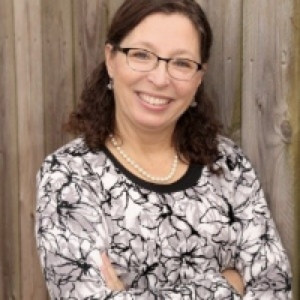
Dr. Julie Parve is the director of graduate nursing and an associate professor at Concordia University. A dedicated family nurse practitioner, she earned her master’s and doctor of nursing practice degrees at Concordia, inspiring her return to the university as faculty. She brings extensive clinical experience in family medicine, urgent care, surgery, labor and delivery, and outpatient care, alongside a passion for international mission work, having participated in over 15 medical missions across countries such as Kenya, Uganda, and Peru.
Dr. Parve is deeply committed to mentoring future nurse practitioners, often integrating them into her mission trips as part of their education. Her specialties in family medicine, dermatology, and infectious diseases reflect her broad clinical interests, while her supportive and flexible approach to online learning fosters success in her students.
NPSchools.com: What do you wish the public understood about online nurse practitioner programs in Wisconsin?
Dr. Parve: Not all online programs are created equal. There are many exceptional online programs where all testing is proctored, and they have very high standards. The profession itself is growing, and we can see that there is a great need for qualified NP providers in low-resource areas. With all the new technology and online simulations that are available, it is possible to assess student learning and knowledge.
Our program requires 750 hours of in-person clinical teaching with a qualified preceptor; this is in addition to the hands-on skills they learned in their undergraduate nursing program and their experience as an RN. The great thing about online programs is that we have been able to offer education to students in areas where travel to a university is not possible due to the long drive or the weather. This is exciting to us, and we have been able to place NPs in areas where there may be only one or no physician available. It is an exciting time for NPs in healthcare, working side by side with physicians and other healthcare providers.
NPSchools.com: What advice would you give to aspiring online nurse practitioner program students?
Dr. Parve: Online programs, including ours at Concordia University, can be very rigorous programs. There is a lot of knowledge you need to learn in order to care for patients. You must prove you are competent to diagnose and treat patients. You need to understand the pathophysiology of diseases, the pharmacology of medications, and how they treat these diseases. You must be prepared to spend a lot of time learning during the program. But once you graduate, we hope that you will love what you do.
What to Expect from the Concordia University Online Nursing Programs
Admission Requirements: Applicants to the College of Nursing at Concordia University must have a 3.0 cumulative GPA for all prior coursework. Online applications require an application fee, official transcripts, an admissions essay, a professional resume, and a Certified Background Check through Castle Branch. All nursing applicants must show proof of a current, unencumbered RN license. International students must also provide proof of English language proficiency.
- Program Specific Admission Requirements
- MSN – FNP and AGPCNP: Hold a BSN degree from an accredited nursing institution
- BSN-to-DNP: – FNP and AGPCNP: Hold a BSN degree from an accredited nursing institution
- Post-Master’s Certificate: Hold an MSN or DNP degree from an accredited nursing institution
State Restrictions: While Concordia University accepts students from most states, applicants outside of Wisconsin should check with the admissions department to make sure they are eligible for the nursing programs. Students from the following states and territories are not accepted at this time into the nursing programs through Concordia University: Alabama, Alaska, Arizona, California, Connecticut, Delaware, Georgia, Hawaii, Kentucky, Louisiana, Maryland, Massachusetts, Mississippi, Nebraska, New Jersey, New York, Oklahoma, Oregon, Pennsylvania, Rhode Island, Puerto Rico, South Dakota, Tennessee, Texas, Vermont, Washington, or West Virginia. Note that Washington DC students must complete their clinicals in Virginia. Prospective students should also contact the licensing board of their specific state of residence to determine if the program meets state requirements for NP licensure.
Study Plan: Concordia University admits nursing students in the fall and spring. Students are expected to complete their degree within five years of the start date. Both full-time and part-time study plans are available. Online nursing program coursework is delivered 100 percent online, and practicums are completed locally. All NP students are required to attend an initial campus orientation before beginning MSN coursework. BSN-to-DNP students also attend two mandatory cohort meetings on the Mequon, WI campus. Students complete clinical rotations beginning either in the fall or spring.
The MSN degree can be completed in three to four years. The BSN-to-DNP program can be completed in three to five years. The certificate programs can be completed in two years, but as little as one year, depending on prior coursework.
MSN Curriculum: The MSN program comprises 41 credits and includes at least 750 clinical hours. Core courses applying to both specializations include healthcare policy and issues in advanced nursing; genetics, immunology, and microbiology for advanced nursing; theoretical foundations for advanced nursing roles and interprofessional collaboration; evidence-based nursing practice; advanced pathophysiology across the life span; role transition for APN; pharmacotherapeutics; foundations of healthcare informatics; and advanced health assessment. Advanced health assessment is a hybrid course where students are required to participate in a two to three-day hands-on, interactive on-campus experience.
Students then choose an elective from special topics-health care; public speaking: reports/presentations; global perspectives in health care; evaluation and testing in nursing education; managerial communication; or diagnostic skills for APRN.
MSN-FNP specialization courses include advanced primary care clinical I-III-FNP.
MSN-AGPCNP specialization courses include advanced primary care clinical I-III-AGPCNP.
BSN-to-DNP Curriculum: The BSN-to-DNP FNP and AGPCNP programs comprise 70 credits and require completion of 1,008 clinical hours through practicums and a DNP project. The core curriculum includes courses such as genetics, immunology, & microbiology for advanced nursing; pharmacotherapeutics; healthcare policy & issues in advanced nursing; theoretical foundations for advanced nursing roles and interprofessional collaboration; advanced pathophysiology across the lifespan; evidence based nursing practice; role transition for the APN; advanced health assessment; biostatistics & epidemiology; advanced evidence-based practice; healthcare informatics; and business management for the doctor of nursing practice.
FNP courses in the DNP program include diagnostic skills for APRN; health promotion and disease prevention in primary care for the FNP; adult chronic and acute disease management-FNP; pediatrics, women’s health, and the older adult-FNP; and FNP primary care clinical residency I-III.
AGPCNP courses in the DNP program include diagnostic skills for APRN; health promotion and disease prevention in primary care for the AGNP; adult chronic and acute disease management-AGPCNP; women’s health and the older adult-AGPCNP; and AGPCNP primary care clinical residency I-III.
Leadership courses include DNP project practicum immersion I-III and DNP project I-II.
Post-Master’s Certificate Curriculum: The post-master’s FNP and AGPCNP certificate program comprises 35 credits. The PMHNP post-master’s certificate program comprises 18 credits. Credits may be reduced depending on prior education, and required courses depend on a review of prior coursework. Courses follow in line with the appropriate specialization of the MSN FNP or AGPCNP courses. PMHNP courses include neuropathophysiology & psychopharmacology for advanced nursing; psychiatric mental health theory I-III; and psychiatric mental health practicum I-III.
Online Experience: Concordia University uses Canvas as its online Learning Management System (LMS). Each online student is assigned an Online Student Success Advisor who supports them throughout their program, offering assistance and guidance as needed. Online degree courses are asynchronous, and some degree paths are cohort-based. Course units have specific due dates for assignments and assessments. Courses are collaborative and require students to actively engage in the material and with faculty and peers.
Requirements may include papers, reading assignments, discussion questions, case studies, journal reviews, and assessments. Students should expect to log on at least four times per week and submit work weekly. Students have access to 24/7 technical support, tutoring, library, and career services, as well as advising and faculty support.
On-Site Requirements: Students in all degree paths are required to attend an initial one-day campus orientation on the campus located in Mequon, Wisconsin. In addition, BSN-to-DNP students come to campus for two mandatory cohort meetings. Advanced health assessment is a hybrid course where students are required to participate in a two to three-day hands-on, interactive on-campus experience.
Paying for the Concordia University Online Nursing Programs
The cost of Concordia University’s online nursing courses varies based on the level of study, whether undergraduate, MSN, or DNP. There is a nursing clinical fee as well. The total estimated tuition for each online NP program is listed in its corresponding table below. Travel costs for the on-campus visits are not included, and there may be other fees associated with the nursing degrees. Prospective students should contact the Graduate Admissions Department of Concordia University for more information.
Concordia University may offer grants, scholarships, and loans to graduate students. There are some scholarships specifically available to adult and post-traditional students. Nursing students should check with their employers to investigate the option of a tuition reimbursement program or tuition discount. Additionally, Concordia students may seek outside opportunities such as organizational, religious, or community scholarships.
Concordia University offers AGPCNP and FNP nursing specializations, an RN to MSN bridge option, and reasonable tuition costs.
BSN to DNP – Adult-Gerontology Primary Care Nurse Practitioner
BSN to DNP – Family Nurse Practitioner
MSN – Adult-Gerontology Primary Care Nurse Practitioner
MSN – Family Nurse Practitioner
Post-Grad Certificate – Adult-Gerontology Primary Care NP
Post-Grad Certificate – Family Nurse Practitioner
Post-Grad Certificate – Psychiatric-Mental Health NP (for NPs)
12800 N Lake Shore Drive
Mequon, Wisconsin 53097
Program Essentials
DNP – Doctor of Nursing Practice
AGNP – Adult-Gerontology Nurse Practitioner
Fall, Spring
No
3
70
1,008
CCNE – Commission on Collegiate Nursing Education
Program Admissions
BSN – Bachelor of Science in Nursing
No GRE Required
3.0 or higher
AL, AK, CA, ID, KY, LA, MD, NJ, NY, OK, PA, PR, SD, TN
Program Tuition
70
$895.00
$62,650.00
$895.00
$62,650.00
Program Essentials
DNP – Doctor of Nursing Practice
FNP – Family Nurse Practitioner
Fall, Spring
No
3
70
1,008
CCNE – Commission on Collegiate Nursing Education
Program Admissions
BSN – Bachelor of Science in Nursing
No GRE Required
3.0 or higher
AL, AK, CA, ID, KY, LA, MD, NJ, NY, OK, PA, PR, SD, TN
Program Tuition
70
$895.00
$62,650.00
$895.00
$62,650.00
Program Essentials
MSN – Master of Science in Nursing
AGNP – Adult-Gerontology Nurse Practitioner
Fall, Spring
No
1
41
750
CCNE – Commission on Collegiate Nursing Education
Program Admissions
BSN – Bachelor of Science in Nursing
No GRE Required
3.0 or higher
AL, AK, CA, ID, KY, LA, MD, NJ, NY, OK, PA, PR, SD, TN, WY
Program Tuition
41
$870.00
$35,670.00
$870.00
$35,670.00
Program Essentials
MSN – Master of Science in Nursing
FNP – Family Nurse Practitioner
Fall, Spring
No
1
41
750
CCNE – Commission on Collegiate Nursing Education
Program Admissions
BSN – Bachelor of Science in Nursing
No GRE Required
3.0 or higher
AL, AK, CA, ID, KY, LA, MD, NJ, NY, OK, PA, PR, SD, TN, WY
Program Tuition
41
$870.00
$35,670.00
$870.00
$35,670.00
Program Essentials
Post-Master Certificate – Post-Graduate (Post-MSN) Nursing Certificate
AGNP – Adult-Gerontology Nurse Practitioner
Fall, Spring
No
1
35
720
CCNE – Commission on Collegiate Nursing Education
Program Admissions
MSN – Master of Science in Nursing
No GRE Required
3.0 or higher
AL, AK, CA, KY, LA, MD, NY, OK, PA, PR, SD, TN, WY
Program Tuition
35
$800.00
$28,000.00
$800.00
$28,000.00
Program Essentials
Post-Master Certificate – Post-Graduate (Post-MSN) Nursing Certificate
FNP – Family Nurse Practitioner
Fall, Spring
No
1
35
720
CCNE – Commission on Collegiate Nursing Education
Program Admissions
MSN – Master of Science in Nursing
No GRE Required
3.0 or higher
AL, AK, CA, KY, LA, MD, NY, OK, PA, PR, SD, TN, WY
Program Tuition
35
$800.00
$28,000.00
$800.00
$28,000.00
Program Essentials
Post-Master Certificate – Post-Graduate (Post-MSN) Nursing Certificate
PMHNP – Psychiatric-Mental Health Nurse Practitioner
Fall
Yes
0
18
500
CCNE – Commission on Collegiate Nursing Education
Program Admissions
MSN – Master of Science in Nursing
No GRE Required
3.0 or higher
None
Program Tuition
18
$800.00
$14,400.00
$800.00
$14,400.00
Tuition is calculated based on credits, at the published tuition rate. Rates may change, so please check here for the latest tuition information. For programs with variable tuition rates, we use the rates for part-time students. “Resident” and “non-resident” refer to the student’s school-recognized state residency status. Tuition number represents the cost of tuition for the entire program, not per semester or year. Estimated total tuition does not include additional fees.
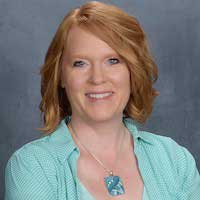
Sara Navratil
WriterSara Navratil is a freelance writer and a Certified Canfield Success Principles Trainer. She’s the owner of Sara Liza Life, a company dedicated to helping people rewrite their lives. She enjoys researching and writing about healthcare-related topics, including information on online NP programs. When not working she likes to read, bake, and spend time with her family.