
What is the APRN Compact for Multistate Licensure? Challenges & Opportunities
Find NP Schools
For the latest academic year, we have over 180 NP schools in our database and those that advertise with us are labeled “sponsor”. When you click on a sponsoring school or program, or fill out a form to request information from a sponsoring school, we may earn a commission. View our advertising disclosure for more details.
“Joining a state nurse practitioner compact makes sense if you’re an individual who receives medical care, or if you’re somebody who is legislating to make sure the people you represent receive good medical care.”
Erin Tobin, MSN, Former South Dakota State Senator
Answer: In 2020, the NCSBN adopted the APRN Compact for multistate licensure to allow APRNs to practice in states beyond where they received licensure. The compact was established to “increase access to care, protect patient safety, and reduce costs while supporting state-of-the-art healthcare delivery.” There have been pros and cons to this policy.
Currently, rural America has a large healthcare gap compared to more populated areas. A January 2024 report from the Joint Economic Committee notes that 90 percent of rural residents are experiencing a shortage of primary care providers. Receiving care in these areas can mean long drives, scheduling appointments months out, or forgoing care altogether. Advanced practice nurse practitioners are uniquely equipped to fill this gap; however, licensing barriers can impact their ability to provide care.
To practice as an advanced practice registered nurse (APRN), a license is required in the state where care is provided. In most cases, the licenses are issued by the state board of nursing, and requirements will vary by state. The qualifications required can also vary based on specialization, such as nurse practitioner (NP), certified nurse midwife (CNM), certified registered nurse anesthetist (CRNA), or clinical nurse specialist (CNS).
Licenses are typically restricted to the state in which they are issued without an interstate compact. Several professions, including registered nurses (RNs), physical therapists (PTs), and doctors, have agreements that allow license holders from a member state to work in other member states. However, a compact for nurse practitioners has yet to be enacted.
Erin Tobin, nurse practitioner and former South Dakota state senator, worked hard to get the compact passed in her state: “Joining a state nurse practitioner compact makes sense if you’re an individual who receives medical care, or if you’re somebody who is legislating to make sure the people you represent receive good medical care,” she said in 2026.
“The National Council of State Boards of Nursing (NCSBN) owns and executes the RN compact. Their rationale for the compact is that it allows mobility for nurses to cross state lines. For example, somebody could live close to the Idaho border and potentially drive into Montana to work,” explained Vicky Byrd, CEO of the Montana Nurses Association.
The NCSBN has made efforts since August 2020 to advance. However, the legislature for the compact has only passed in four states, with pending bills in one more. Seven states must enact the compact for it to go into effect. Only some think the compact is a good idea, and there has been strong opposition from many national organizations, such as the American Association of Nurse Practitioners (AANP) and the National Association of Pediatric Nurse Practitioners (NAPNP). Montana’s proposed bill to join the compact was voted down on April 4, 2023.
“On paper, the compact sounds good,” said Byrd. “You just need one license, and you can travel anywhere. But it’s more complicated than that.” Tobin, who has seen the compact from the legislative side, takes a more optimistic view. For her, the barriers that come with maintaining multiple licenses across state lines are ultimately barriers to patient care. “Nurse practitioners are qualified, they’re good at what they do, but you can’t see them because there’s a barrier to care,” she says.
Keep reading to learn more about the APRN compact, why there is so much opposition, and what the future might look like for the compact.
Meet the Experts: Vicky Byrd, MSN and Erin Tobin, MSN

Vicky Byrd is the chief executive officer of the Montana Nurses Association (MNA) and has been a registered nurse since 1989. She started her career as a certified pediatric nurse and, in 2002, moved forward with her professional development and became a certified oncology nurse.
Byrd practiced as an oncology nurse until 2014, then transitioned to her nurse leadership role as CEO for MNA. At the national level, she leads the MNA members with their affiliation with the American Nurses Association, American Association of Nurse Practitioners, and American Federation of Teachers-Nurses and Health Professionals. In April 2019, she obtained her master of science in nursing, with a program study in nursing leadership and management.
Byrd spoke to NPSchools.com in 2023.
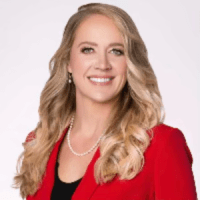
Erin Tobin is a nurse practitioner with more than 15 years of experience providing care in rural South Dakota. She practices in both family and emergency medicine, including work in underserved communities such as the Rosebud Indian Reservation, and owns a medical clinic in Winner. Her clinical work focuses on improving access to care in rural settings, and she has been a strong advocate for policies that allow nurse practitioners to practice to the full extent of their training.
Tobin’s frontline experience in healthcare led her into public service, where she served in the South Dakota State Senate from 2021 to 2025. She first became involved in policy through efforts to expand full practice authority for nurse practitioners and later chaired the Senate Health and Human Services Committee. Her work bridges clinical practice and policymaking, bringing a provider’s perspective to legislation aimed at strengthening rural healthcare systems and expanding patient access.
Tobin spoke to NPSchools.com for an update to this article in 2026.
The APRN Compact Summary
In 2020, the NCSBN adopted the APRN Compact for multistate licensure. They drafted model language for state legislatures to enact. Per the NCSBN, the compact was established to “increase access to care, protect patient safety, and reduce costs while supporting state-of-the-art healthcare delivery.”
The key benefits listed for the compact include easier access to care, the ability to provide telehealth services, ease in providing disaster and pandemic relief, flexibility for military families, simpler online nursing education, and a lower cost since APRNs need to maintain only one license.
The proposed compact would allow APRNs with 2,080 practice hours to practice in their home state and any other state in the compact.
Tobin’s Case for the Compact (2026)
Not only is Tobin a seasoned rural healthcare provider, but she also brings her perspective from serving in the South Dakota legislature, where she helped write the laws that govern how those practitioners work. She was instrumental in passing the APRN compact in SD, and she believes it can have a profound impact on communities facing provider shortages.
Rural Reality
Tobin has spent her entire career as a nurse practitioner serving rural populations. She has experienced firsthand how difficult it can be for patients to receive care, as well as the challenges nurse practitioners face when required to be under physician supervision: “If we have one physician at a clinic or hospital and they’re supervising five nurse practitioners, in reality, that supervision is not happening,” she said. “It’s a barrier to care, and we just need to be real about what’s actually playing out in those rural areas, and what’s creating barriers that end up sitting in the lap of the patient when they need medical care.”
The Hours Debate
Every state has its own licensing requirements for nurse practitioners. Some of these states award NPs full practice authority without having to complete supervised hours first.
In South Dakota, nurse practitioners must complete 1,400 hours of supervised work experience in order to receive full prescriptive authority. The APRN Compact requires nurse practitioners to log 2,080 hours before they qualify for a multistate license.
While this is higher than South Dakota’s current requirement, Tobin sees this as a point of compromise. From her perspective, doctors have to complete a residency requirement, so it is not that different for nurse practitioners to have to complete some supervised hours as well. However, many others, including Byrd, see this as a step back and do not support the required hours.
Scope of Practice vs. Full Practice Authority
A piece that often gets confused for many people, according to Tobin, is the difference between the scope of practice and full practice authority.
Scope of practice refers to what a nurse practitioner is clinically qualified to do based on their education, training, experience, and the privileges granted by the facility where they work. It is not a fixed thing. It expands as a provider gains experience and competencies in new areas. Full practice authority, on the other hand, refers to a nurse practitioner’s legal ability to practice without physician supervision.
The compact requires states to have full practice authority in place before joining, but it does not change what any individual provider is clinically qualified to do: “Full practice authority is allowing you to use your scope of practice in more places,” she says. “People get scared that they’re going to be asked to practice outside of their scope, and that has nothing to do with the laws requiring a physician to supervise you.”
The Federal Incentive
For states on the fence about joining the compact, Tobin points to a concrete financial incentive. When the federal government began distributing Rural Health Transformation funding, states were awarded extra points in their applications based on certain indicators, including whether they had full practice authority and whether they had joined the compact.
South Dakota, which had already accomplished both, benefited directly and will receive nearly $1 billion over five years to expand access to rural healthcare. Tobin believes this kind of federal incentive will push more states to act, particularly those with large rural populations that stand to gain the most from the funding.
What Patients Need To Know
At the end of the day, Tobin says the compact is really about patient choice. Most people with health insurance can shop around for a provider, and that matters. A provider who communicates well with a patient, educates them, and earns their trust leads to better health outcomes.
The compact expands the pool of providers a patient can choose from. Without it, a great provider just across the state line may not bother maintaining a license in your state year after year. It is an easy financial decision for them, but the patient loses out: “They’re qualified, they’re good at what they do, but you can’t see them because there’s a barrier to care,” she says. In rural communities where options are already sparse, that barrier carries real weight.
Byrd’s Perspective On The Challenges With The APRN Compact (2023)
Not everyone thinks that the APRN compact is as advertised: “A compact will not solve your provider vacancies,” says Byrd. “When Montana opened up the RN compact, nurses did not flood into the state. It hasn’t fixed the staffing crisis.” Here are some of the top concerns and challenges with the APRN compact.
Licensing Follows The Patient
One of the outcomes of compact licensure is that the rules have changed how and where providers can care for patients. “What the compact did is it changed how we practice nursing in that our license no longer belongs to us. It goes with the patient,” explained Byrd. “So if you come into my oncology clinic, I take care of your child, and you go on vacation to Hawaii, which isn’t a compact state, I would tell you that I can’t tell you how to take your nausea medicine because you’re out of state and I am not licensed to care for you there.”
She continued, “Once they’ve established care with a patient, just because they travel to another state doesn’t mean you shouldn’t be able to provide continuity of care.”
Still Need a Home License
If the APRN compact were enacted, nurses would still need to maintain a license in their home state. While this is great for traveling nurses, anyone who relocates still needs a new license. “If you pack up your family and move to Iowa because they’re a compact state, your compact license doesn’t work anymore. You must get an Iowa state license because it is your new home state. Not everyone thinks this through,” shared Byrd.
Lack Of Oversight
According to Byrd, nurses working on compact licenses don’t have sufficient oversight: “There’s no way to monitor those working on a compact license in your state. That means there’s also no enforcement. The Montana Board of Nursing doesn’t even know they have come in. They can just continue to work on their multi-state license. Many will just renew their home state license, which may not have the regulations we do. For RNs in Tennessee, they don’t need any contact hours to renew, which in Montana, you do,” she said.
Required Practice Hours
The most significant pushback to the APRN compact has been the required practice hours. To have a multistate compact license, APRNs will need 2,080 hours. “We believe in APRNs practicing to the highest extent of their education, which in Montana includes full practice authority for over four decades. As soon as our nurse practitioners graduate and get board certified, they’re ready to care for patients and do not need supervision,” explained Byrd. If Montana joined the compact, its APRNs would have more restrictions on practice than they do now.
The AANP’s position statement says, “APRNs are prepared for safe entry to practice at the point of graduation from an accredited graduate program and after the successful passage of a national certification board examination. The inclusion of minimum practice hours as a requirement for a multistate APRN license creates unnecessary and costly regulations for all states and new challenges for the states currently working to retire similar barriers.”
The Future of the APRN Compact
Presently, the APRN compact is moving forward slowly. Currently, North Dakota, South Dakota, Utah, and Delaware have joined the compact, and it is pending in several more states. There must be at least seven states for the compact to take effect.
However, many want the compact to be rewritten: “They need to go back to the drawing board and invite the APRNs to the table so they can voice their concerns. Let’s make it make sense,” encouraged Byrd.
For Byrd, her ideal program would look very different: “Respect the autonomy of each state. I would eliminate the compacts and have each state board of nursing regulate nurses working in their state. This way, each state can regulate what’s important for its state. Then, I would have an expedited license. For example, incoming APRNs would receive a temporary license and could begin work the next day. Once they comply with all the requirements of their new state, they will get a full license. It would no longer take months and months to get a license,” she said.
Tobin is cautiously optimistic. She believes the federal Rural Health Transformation funding will nudge more states toward joining over the next five years, particularly those with large rural populations that have the most to gain. That said, she also acknowledges that full nationwide adoption may never happen. States with larger urban populations, more physicians, and less reliance on federal rural funding simply have less incentive to make the legislative changes required to join. For now, she sees the compact as a work in progress—one that is moving in the right direction, even if slowly.

Kimmy Gustafson
WriterAmong her many diverse writing endeavors, Kimmy Gustafson has also lent her expertise to NPSchools.com since 2020, providing insightful and engaging content about the significant role of education in shaping our future generations of nurse practitioners. Many of her pieces include interviewing experts on timely topics such as healthcare workplace violence and moral distress.
Kimmy has been a freelance writer for more than a decade, writing hundreds of articles on a wide variety of topics such as startups, nonprofits, healthcare, kiteboarding, the outdoors, and higher education. She is passionate about seeing the world and has traveled to over 27 countries. She holds a bachelor’s degree in journalism from the University of Oregon. When not working, she can be found outdoors, parenting, kiteboarding, or cooking.