
Ask the Professors: The Fight for Full Practice Authority in Michigan
Find NP Schools
For the latest academic year, we have over 180 NP schools in our database and those that advertise with us are labeled “sponsor”. When you click on a sponsoring school or program, or fill out a form to request information from a sponsoring school, we may earn a commission. View our advertising disclosure for more details.
“FPA means improved access, maintained quality, and even reduced costs. The demographic, political, and economic pressure is cumulative and building.”
Elizabeth K. Kuzma, DNP, Clinical Assistant Professor and Assistant Dean for APRN Academic Programs, University of Michigan School of Nursing (UMSN)
The retirement of the Baby Boomers is leading to a nationwide primary care crisis, where there won’t be enough primary care physicians to meet the demands of the population. But in some states, like Michigan, the crisis might already be here. Michigan has 288 Health Professional Shortage Areas (HPSAs) that do not have enough primary care providers for the local population (KFF 2025). The majority of those HPSAs are considered either rural or partly rural and are associated with higher chronic disease burden and higher cost of care. Their combined population comes out to over 2.6 million people, making up approximately a third of the state.
Nurse practitioners (NPs) could be the answer. As highly educated clinicians whose training goes beyond that of traditional registered nurses (RNs), nurse practitioners are proficient in a number of critical services that states like Michigan sorely need. Research has repeatedly shown that NPs provide high-quality, cost-effective care that’s equal to or better than that of physicians. The quality and safety of NP education has been proven time and again. If empowered to practice the care that they’ve been trained to provide, NPs can act as a force multiplier in Michigan’s fight against the primary care crunch.
Meet the Expert: Elizabeth K. Kuzma, DNP, FNP-BC
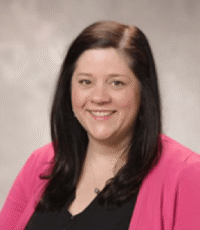
Dr. Elizabeth Kuzma is a clinical assistant professor and assistant dean for APRN academic programs at the University of Michigan’s School of Nursing (UMSN). She earned her MSN from Michigan State University and her DNP from Wayne State University.
Dr. Kuzma sees public policy advocacy at all levels as the broadest form of patient advocacy for health promotion and disease prevention. She is a past American Association for Nurse Practitioners (AANP) State Representative for Michigan, and has served on the AANP National Research Committee, the AANP National Nominations Council, and the Michigan Council of Nurse Practitioners (MICNP) Finance Committee. She was awarded the AANP State Award for Excellence in 2012 and the MICNP NP Scholar of the Year Award in 2022.
Dr. Kuzma was interviewed for this article in 2020 and 2026.
Barriers for Michigan’s NPs: Lacking an APRN-Specific Scope of Practice
Unfortunately, Michigan doesn’t allow NPs the latitude that their education and training should afford them: according to the American Association of Nurse Practitioners (AANP), Michigan is a restricted practice state and the least flexible of all its neighbors regarding NP practice authority.
Unlike in most other states, Michigan NPs have no clearly defined scope of practice (SOP) for their profession. Typically, an SOP outlines what services a particular healthcare professional is competent and able to provide under the terms of their professional licensure. But in Michigan, NPs operate under the SOP of registered nurses (RNs), which undersells their experience, education, and training. It also restricts Michigan’s patient population’s access to what could be an affordable, convenient, and competent medical resource.
“The way that Michigan’s nurse practitioners are described in the Public Health Code is limited and creates unnecessary barriers for patients who want to access healthcare from nurse practitioners,” Dr. Kuzma says. “Not having a clearly defined scope of practice and being legally tied to another healthcare profession in order to practice, limits the ability of NPs to reach all patients in need of care.”
Barriers for Michigan’s NPs: Burdensome Supervision Requirements
Current regulations require Michigan NPs to work under a supervising physician, whose approval they need to perform certain procedures, access certain diagnostic tests, or write scheduled prescriptions. This creates numerous barriers to providing care and effectively eliminates a significant portion of the force-multiplying benefit that NPs could have in Michigan, particularly in the rural areas.
And if a supervising physician retires, or even simply decides to no longer serve in the same capacity, an NP will have to stop providing care until a replacement can be found, thus leaving that NP’s patients without a primary care provider in the interim.
“Personally, I have worked with a collaborating physician who had their own privately-owned medical practice separate from where I practiced,” Dr. Kuzma says. “When I ordered laboratory or diagnostic studies for my patients, the orders were placed under the physician’s name. Often, the results would be sent to his private practice and not the practice where I worked. Our practice had to call his private practice and request that the results of these laboratory or diagnostic studies be faxed over to our practice. This always created delays in receiving patients’ results and following up on abnormal results requiring further intervention or referral to specialty care. Sometimes the delay was greater than a week.”
A weeklong delay is often much more than a mere inconvenience to the patient and provider. Effective healthcare access depends on being seen promptly by a primary care provider and on receiving both preventive and responsive treatments in a timely manner. Regulatory burdens, such as supervisory requirements and an undefined scope of practice, don’t ensure better care for Michigan’s residents.
The Benefits of Full Practice Authority for NPs & Patients
The solution is full practice authority (FPA). Under FPA, NPs have full authority to evaluate patients, diagnose illnesses, prescribe medications, order and interpret diagnostic tests, and initiate and manage treatments under the exclusive licensure provisions of a state nursing board. The Federal Trade Commission, the National Academy of Medicine, the American Association of Retired Persons (AARP), and others have all called for a reduction in the barriers NPs face in providing primary care. Currently, over half of all states and territories in the US have adopted legislation that moves towards full practice authority for NPs.
“Full practice authority for Michigan NPs would mean that Michiganders have greater access to healthcare services and to nurse practitioners,” Dr. Kuzma says.
States with FPA laws improve access to care, utilization of care, and provider supply. A 2016 RAND study suggests the same is possible in Michigan, should steps towards full practice authority be taken. Reducing the barriers NPs face in delivering care can also reduce the cost of care and protect a patient’s choice as to what provider they see. Unburdened by stifling collaborative agreements, Michigan’s NPs could more easily relocate to rural and underserved populations and begin addressing the needs of a sizable and vulnerable chunk of the state’s population.
The road to full practice authority in any state is shaped with numerous legislative victories, large and small. In Michigan, that road is longer than it is in most of the country. In 2017, the state finally began allowing NPs to autonomously prescribe non-scheduled drugs, to order physical or speech therapy, and to perform independent house calls. Further progress at the legislative level has been sluggish, but Michigan’s NPs continue to advocate for changes at the state and federal level that improve the health of the public.
Grassroots efforts by the Michigan Council of Nurse Practitioners (MICNP) and other NPs are making progress in educating the public and raising awareness of what the profession can offer. Support at the national level comes through the American Association of Nurse Practitioners (AANP). Sometimes advocacy means reaching across the aisle to groups like the American Medical Association (AMA), and other times it means preventing misinformation from being spread, but the focus is always on how to best serve patients and their families.
“All healthcare providers, including NPs, should work together to ensure all patients are able to access high-quality healthcare by updating laws and regulations that impede the delivery of safe and effective healthcare,” Dr. Kuzma says.
Update 2026: Setting the Stage for Future Success
Michigan is still a restricted practice state. However, there are positive indicators that things may soon move in the right direction. In 2021, Michigan lawmakers passed legislation allowing CRNAs to administer anesthesia without physician oversight, as long as the CRNA is part of a patient-centered care team. While this change does not affect NPs specifically, it does provide a proof-of-concept for expanded APRN practice in the state. Notably, however, it comes with guardrails.
“The medical society secured amendments requiring CRNAs to have a minimum of three years of experience and 4,000 hours practicing in a healthcare facility (or hold a doctoral degree), and the legislation prohibits CRNAs from practicing pain management in a freestanding pain clinic without physician supervision,” Dr. Kuzma says. “It’s a partial win, but it established an important precedent.”
In the 2023-2024 legislative session, HB 5114 proposed to add NPs, CNSs, and PAs to Michigan’s Mental Health Code, which currently only references physicians and psychologists. While the bill was not successful, it did move through many parts of the policy process successfully, setting the stage for future success.
“Michigan continues to struggle with healthcare workforce shortages, particularly in the behavioral health space, and alignment throughout Michigan’s compiled laws would allow NPs, CNSs, and PAs to provide care to the fullest extent possible,” Dr. Kuzma says.
The main advocacy push in Michigan today centers around HB 4399 and SB 268, bipartisan legislation introduced in 2025 that would authorize full practice authority for NPs. If passed, the bill would remove the requirement of an administrative contract with a physician and allow NPs to perform comprehensive health assessments, diagnose and treat acute and chronic illnesses, order and interpret medical tests, and prescribe treatments (including Schedules II-V substances without physician delegation). It’s currently in committee and is active in the legislative process.
“The dominant mood among Michigan NPs active in advocacy is one of urgency and growing impatience,” Dr. Kuzma says. “Advocacy strategy has grown more sophisticated. The Michigan Council of Nurse Practitioners (MICNP) Legislative Committee is taking a grassroots-to-statehouse approach: building relationships with individual legislators, with NPs serving as official MICNP liaisons to their state representative or senator, coordinating district visits, and attending legislative events. This reflects a targeted, relationship-based model.”
The issue is critical. Michigan’s restricted practice status is actively driving NPs to leave the state for more progressive ones, thus worsening existing healthcare provider shortages. The logic of collaborative agreements—where collaborating physicians don’t need to be in the same building, county, or geographic area as an NP—remains opaque. Yet the opposition maintains that physician oversight of NP practice is a public safety issue.
“Much of the opposition is driven by thoughts, feelings, anecdotal experiences, and fear tactics,” Dr. Kuzma says. “But they don’t have the evidence to support their claims.”
Feelings, especially ones like fear, can be contagious. Even NPs are susceptible. While the main opposition groups remain the Michigan State Medical Society, the Michigan College of Emergency Physicians, and the American Medical Association, a limited number of individual NPs also submitted testimony to the House Health Policy Committee, arguing that NPs should be collaborating with physicians for a number of years before practicing independently, and that collaborative agreements were genuinely important for patient safety.
“To me, this is highly upsetting,” Dr. Kuzma says. “Even if laws change to support FPA for NPs, it doesn’t preclude individual NPs from arranging a contract with a physician for a collaborative agreement. They should not work against their entire profession because of their own unease about transitioning into a new role. It seems some NPs are under the illusion that having a collaborative contract with a physician will protect them if a patient experiences an adverse outcome or event. What they don’t realize is that both the NP and the physician could be held responsible in such a situation.”
Despite the headwinds they face in the region’s most restrictive state, Michigan NPs have reasons to be hopeful for the future. HB 4399 and SB 268 have strong bipartisan support. The need for these bills is clear and quantifiable: Michigan still has 288 Health Professional Shortage Areas, with acute shortages concentrated in the northern Lower Peninsula. Empowering NPs to practice to the full extent of their education and training is a turnkey way to expand access to care.
“More than half of the states and US territories have full practice authority (FPA), and the evidence supports it,” Dr. Kuzma says. “FPA means improved access, maintained quality, and even reduced costs. The demographic, political, and economic pressure is cumulative and building.”
Though broadly optimistic, Dr. Kuzma still prescribes a dose of caution. Michigan has one of its most favorable legislative environments in years, but the path from committee hearings to the governor’s signature involves multiple challenges. The governor’s veto of nurse licensure compact legislation in 2020, along with a partisan vote in 2025, show how even strong policy cases can be stalled or shut down.
“The NPs who are still here, still advocating, and still practicing under collaborative agreements are doing so with more organized tools and more bipartisan allies than they had five years ago,” Dr. Kuzma says. “That’s meaningful. Whether it’s sufficient in this legislative session remains to be seen. However, I feel it is just a matter of time before FPA becomes a reality for NPs in Michigan.”

Matt Zbrog
WriterMatt Zbrog is a writer and researcher from Southern California, and he believes nurse practitioners (NP) are an indispensable component of America’s current and future healthcare workforce. Since 2018, he’s written extensively about the work and advocacy of NPs, with a particular focus on the rapid growth of specialization programs, residencies, fellowships, and professional organizations. As part of an ongoing series on state practice authority, he’s worked with NP leaders, educators, and advocates from across the country to elevate policy discussions that empower NPs. His articles have featured interviews with the leadership of the American Association of Nurse Practitioners (AANP), the National Association of Pediatric Nurse Practitioners (NAPNAP), and many other professional nursing associations.