
The Overturn of Roe and Women’s Reproductive Care: How Practitioners Are Fighting Back
Find NP Schools
For the latest academic year, we have over 180 NP schools in our database and those that advertise with us are labeled “sponsor”. When you click on a sponsoring school or program, or fill out a form to request information from a sponsoring school, we may earn a commission. View our advertising disclosure for more details.
“When you’re in an exam room, you want to have a conversation with your provider, not with the government. We have to take a stand. Healthcare is a human right.”
Jessica Wells, PhD, President of the National Association of Nurse Practitioners in Women’s Health (NPWH)
In June 2022, a conservative-led Supreme Court decision (Dobbs v. Jackson Women’s Health Organization) struck down Roe v. Wade and removed the federal right to abortion. This has had immediate and massive implications for reproductive health in America. Several states’ trigger bans—pre-written laws that would ban or restrict abortion if and when Roe was struck down—went into effect. Medication abortion, via mifepristone and misoprostol, became a greater focus of legal and policy fights. Providers faced legal uncertainty, patients began traveling farther, and further confusion around other areas of reproductive care rippled across the nation.
Today, 13 states have completely banned abortion, and 27 states ban abortion at a specific gestational stage (some as early as six weeks, around the same time most women learn they’re pregnant). Additionally, nine states require a waiting period before receiving an abortion, and 24 states require parental involvement for a minor to receive an abortion. These restrictions endanger women and disproportionately affect women of color and women from low-income areas.
However, some states have built in their own protections for a woman’s right to choose. Currently, 12 states require state-regulated private plans to cover abortion, and 23 states have passed shield laws that reduce legal risks for clinicians who provide abortion care to patients who live in states where abortion is banned or restricted.
But it’s a slippery slope. When the government starts restricting life-saving forms of healthcare, what else can be taken away? Medical decisions are best made by medical professionals. The decision to overturn Roe v. Wade was made by unelected political appointees with no background in medicine or science.
“Unfortunately, women’s healthcare in America is politicized,” Dr. Wells says. “It’s one of the few forms of healthcare that’s always in the political arena. But when you’re in an exam room, you want to have a conversation with your provider, not with the government. We have to take a stand. Healthcare is a human right.”
Meet the Experts
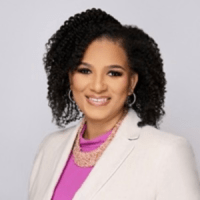
Jessica Wells, PhD, RN, WHNP-BC, FAAN
Dr. Jessica Wells is a board-certified women’s health nurse practitioner. She received her undergraduate degree in nursing from Howard University and earned a PhD in nursing, along with a graduate certificate in women’s, gender, and sexuality studies, from the Laney Graduate School at Emory University.
Dr. Wells serves as the 2026-2027 president of the National Association of Nurse Practitioners in Women’s Health (NPWH) and served on the Board of Directors from 2022 to 2025. She is a fellow of the American Academy of Nursing.

Pamela Pearson, DNP, CNM, FACNM
Dr. Pamela Pearson is a clinical associate professor and program director for midwifery and women’s health in the Department of Human Development Nursing Science at the University of Illinois Chicago. She earned her BSN and MSN from Rush University, and her DNP from the University of Illinois at Chicago.
Dr. Pearson has been a certified nurse-midwife (CNM) at the University of Illinois Hospital and Health Science Systems since 1994. She is a fellow of the American College of Nurse Midwives. Dr. Pearson was selected as one of the Chicago Defender’s 2025 Women of Excellence.
The Most Immediate Challenges for Practitioners & Patients
Part of the core mission of women’s health nurse practitioners (WHNPs) and certified nurse-midwives (CNMs) is to provide safe, evidence-based care. But the introduction of restrictions and bans on abortion is impacting their ability to provide that care. WHNPs and CNMs now have to take into consideration new, shifting, and unintuitive laws that vary from state to state. It’s truly confusing: in a 2024 survey, only one in four women could correctly describe the status of abortion in the state they live in.
WHNPs, CNMs, and other healthcare providers are faced with the very real fear of criminalization: either by providing an emergency abortion that the law determines wasn’t necessary, or by not providing an emergency abortion that results in severe consequences for the patient (from infection to death).
“We’re not lawyers,” Dr. Wells says. “We are trained as healthcare providers and provide high-quality care. Part of our core mission is supporting women in their right to choose, regardless of what that choice is.”
More restrictive legislation looms. In 2023, Montana adopted a rule that would have limited Medicaid coverage for abortion care to those provided by physicians, excluding NPs, CNMs, and physician assistants (PAs). The rule was challenged in court, and its restrictions were at the time blocked due to a preliminary injunction. However, the attempt to impose such restrictive legislation is proof of an outgrowth of an unsettling strain of misinformation: that abortions are dangerous (KFF 2024).
Abortions are safe. There is only a 0.23 percent risk of a major complication and a 1.88 percent risk of a minor complication during a typical abortion procedure. Those statistics are on par with many other outpatient procedures, and, in some cases, lower. There is no data that suggests abortions provided by NPs, CNMs, or PAs are any more dangerous than those provided by physicians. But Medicaid covers 83 million low-income people in the US, and Montana’s proposed rule would further limit access to care.
Bans and restrictions on abortion create a burden for providers and patients. Patients from restrictive states may travel across state lines to seek care, risking prosecution if caught and sacrificing time and money for travel. Meanwhile, providers in shield states with more restrictive neighbors are seeing a significant influx.
“Now more than ever, there is a critical need to cultivate healthcare providers who are prepared to answer the call and ensure access to comprehensive reproductive healthcare for all,” Dr. Pearson says.
The Impact on, and Response by, Shield States
Illinois is a prime example of where this is playing out. It borders Indiana and Kentucky (both states with total bans on abortion), Wisconsin and Iowa (which ban abortion at 20 weeks and 6 weeks, respectively), and Missouri (where only physicians can provide abortions, and only in person, with restrictions on medication abortion). It’s the nearest shield state to a swathe of other Southern states with total abortion bans. In 2025, around 32,000 abortions were provided to out-of-state residents in Illinois, amounting to approximately a quarter of all Americans who traveled across state lines for abortion care.
“We are witnessing a widening gap in access to reproductive healthcare,” Dr. Pearson says. “Patients in restrictive states have barriers, including travel burdens, financial strain, and delays in care—factors that disproportionately affect already marginalized populations and further exacerbate existing health disparities.”
Another gap is in provider training. WHNPs and midwives need to be adequately trained to provide the full spectrum of reproductive care, including abortion care. Foundational education regarding abortion care for WHNPs is included in the WHNP education criteria, and individual WHNP programs have flexibility as to how such information is included in the curriculum. But access to comprehensive training is increasingly limited in states with restrictive policies, creating gaps in clinical competency and threatening their ability to meet patient needs. Some creative models have emerged in response.
“In Illinois, programs have developed solutions, such as training APRN reproductive health fellows from across the region, in order to expand the pool of clinicians skilled in providing comprehensive reproductive care,” Dr. Pearson says. “Practitioners from restrictive states are also traveling to Illinois to gain hands-on experience in options counseling and abortion care, ensuring that they can return to their communities with essential skills.”
At UIC, where Dr. Pearson teaches, she and her colleagues have created an elective course on reproductive healthcare that includes abortion care. The course will be available to any student in UIC’s DNP program. And, in 2024, UIC researchers were awarded a grant to educate advanced practice nurses on abortion care from a reproductive justice framework.
“The future of reproductive care is still on the line,” Dr. Pearson says. “Access will continue to be an issue. However, I am feeling emboldened. I am committed to helping our patients get the care that they need, and I will continue to engage in comprehensive reproductive education with my students and colleagues. We cannot stop pushing and advocating.”
The Power of Professional Advocacy
Reproductive healthcare is firmly within the scope of practice for APRNs. The scope of APRNs in women’s health also explicitly includes advocating for patients, speaking up for them and the services they need. NPWH specifically outlines WHNP practice as grounded in the principles of reproductive and social justice and a trauma-informed approach to care.
“Speaking up and advocating for accessible reproductive care does not push WHNPs beyond their scope,” Dr. Wells says. “In fact, they are actively practicing their scope in doing so. It is our professional obligation to speak up for the healthcare services that we can provide our patients, and to provide nonjudgmental, supportive, and trauma-informed principles to ensure each patient receives the best possible care.”
Both NPWH and ACNM have condemned the decision to overturn Roe and issued strong position statements supporting access to abortion as an essential part of reproductive healthcare. In 2023, they jointly filed an amicus brief arguing that advanced practice clinicians, including WHNPs and CNMs, are qualified to provide medication abortion safely, and that restricting access would harm patients and providers. These unified positions speak not only for thousands of WHNPs and CNMs, but also for their patients and the millions of Americans for whom reproductive healthcare is essential. More nursing organizations are coming together to amplify the issue.
“We’re hoping this is the start of momentum,” Dr. Wells says. “We need to come together. We can be a big voice. We may lose a battle here and there, but the fight for reproductive justice is still ongoing.”
The Future of Reproductive Health in America
Reproductive health is not going away. More abortions are happening per year than before Roe was overturned: what’s changing is where those are happening, who’s getting them, under what conditions, and at what cost (Guttmacher 2026).
Telehealth has been a critical tool for expanding access. Medication abortion using mifepristone and misoprostol can be safely provided via telehealth for up to 11 weeks gestation in many cases, with medications dispensed through local pharmacies—allowing WHNPs and CNMs to continue delivering care despite geographic and regulatory barriers. But restricting reproductive healthcare services only creates unnecessary fear among providers, patients, and communities.
“Overall, I am feeling emboldened and excited for the future,” Dr. Wells says. “Even though there is no shortage of restrictions on access to abortion healthcare, we have innovated and pivoted to ensure access to safe reproductive care.”
The future of reproductive healthcare needs to be widely accessible. It is a safe and essential component of healthcare. Stigmatization is harmful, and restricting reproductive healthcare in any way has ripple effects on other aspects of healthcare, including defunding clinics. But WHNPs, CNMs, and other women’s health practitioners have historically risen to the challenge of filling gaps in healthcare. They will continue to do so.
“We’re actually going to get stronger from this,” Dr. Wells says. “We’re taking a more proactive role, rather than a purely reactive one. Nursing is a powerful profession, and this has mobilized us to advocate for our patients.”