
How NPs Are Advancing Geriatric Care: Interview with an Expert
Find NP Schools
For the latest academic year, we have over 180 NP schools in our database and those that advertise with us are labeled “sponsor”. When you click on a sponsoring school or program, or fill out a form to request information from a sponsoring school, we may earn a commission. View our advertising disclosure for more details.
“As the population ages and the demand for providers with expertise in caring for older adults increases, AGPCNPs will be well positioned to help address critical shortages and improve access to high-quality care.”
Casey Brown, DNP, AGPCNP Program Director, Duke University
Americans are older than ever. As the Baby Boomer generation ages, it has created a demographic shift sometimes called, controversially, a silver tsunami. The controversy in that term stems from the fact that tsunamis are typically destructive, while an aging population isn’t. But failing to provide an aging population with high-quality care would come with calamitous consequences.
The nation’s well-documented primary care crunch affects people of all ages. But older adults are particularly vulnerable: their needs are often different and more complex than those of younger. Adult-gerontology primary care nurse practitioners (AGPCNPs) are well-suited to help. They have specialized training to meet older adults’ complex needs. They provide comprehensive, high-quality care. Using the NP’s holistic model, they can support patients in the ways they need and deserve. Leveraging the expertise of AGPCNPs would be a critical step in caring for America’s aging population.
Meet the Expert: Casey Brown, DNP, RN, AGPCNP-BC, AOCNP®
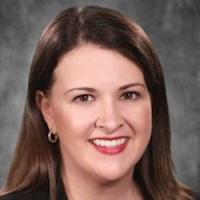
Dr. Casey Brown is an assistant professor and director of the adult-gerontology nurse practitioner-primary care program at Duke University School of Nursing. She earned both her MSN and her DNP from Duke, where she joined the faculty in 2020.
Dr. Brown is appointed with the Duke University Health System. She practices at the Preston Robert Tisch Brain Tumor Center at Duke. She is also a member of the Oncology Nursing Society and the Advanced Practitioner Society for Hematology and Oncology.
The Challenges of Geriatric Care
“One of the greatest pressures in geriatric care is that the aging population is growing faster than the healthcare providers trained to provide the care for them,” Dr. Brown says. “Nearly one in five Americans is now over the age of 65, representing nearly a 35 percent increase in the older adult population over the past decade.”
In 2020, nearly 64 percent of US counties had neither a geriatric physician nor a geriatric nurse practitioner (JAMA 2024). In nonmetropolitan areas, the figure was nearly 80 percent. Most of the underserved areas were clustered together, further compounding the problem of access. In 2022, 24 percent of Americans 65 or older rated their health as fair to poor, a rating significantly worse than younger groups (ACL 2024).
“Another major challenge is the increasing complexity of care,” Dr. Brown says. “Many older adults are living longer with multiple chronic conditions such as heart disease, diabetes, cancer, and dementia. While specialty care is essential, patients can sometimes become disconnected from routine primary care as they focus on managing individual diseases. This must change.”
Patients who have access to geriatric care—with comprehensive assessment, longer-term coordination, and interdisciplinary management—have improved health outcomes. They have more function and independence, safer and more appropriate medication use, fewer avoidable hospital visits, and better care coordination. But the US has fewer than 7,000 geriatric physicians, and that figure’s been stable for years.
The Role of AGPCNPs
The number of geriatric NPs rose from 1,778 in 2010 to 5,508 in 2020, an increase of approximately 210 percent. (JAMA 2024). Counties served by only a geriatric NP increased from 3.3 to 9.8 percent over the same timeframe. Those figures count all NPs who identify gerontology as their clinical specialty—some are not board-certified as AGPCNPs—but the trend still stands, and with good reason: NPs are well-suited to help Americans age healthily.
“AGPCNPs are uniquely positioned to assess, diagnose, and manage the complex health needs of older adults,” Dr. Brown says. “Our education is specifically focused on caring for adolescents, adults, and older adults, with a strong emphasis on the physiologic changes of aging, chronic disease management, geriatric syndromes, functional status, and patient-centered care.”
As nurse practitioners, AGPCNPs follow a holistic model. They consider the whole person. NPs also tend to spend more time with their patients than physicians and are more likely to serve in rural and underserved areas. With a shorter training pathway to practice than geriatric physicians, AGPCNPs are one answer to increasing access to geriatric care.
“The NP model of care is particularly well suited to older adults because it emphasizes holistic, relationship-based, and longitudinal care,” Dr. Brown says. “AGPCNPs excel at care coordination, collaboration, and communication across healthcare settings.”
Much of modern healthcare happens outside the patient visit. AGPCNPs help smooth the transitions. For older adults, that coordination is especially crucial as they move between multiple specialists and healthcare organizations. AGPCNPs help patients navigate a complex system and receive the assistance they need to stay healthier longer. American Association of Nurse Practitioners (AANP)’s PEARL framework highlights their unique strengths: AGPCNPs Practice, Educate, Advocate, conduct Research, and serve as Leaders.
“Older adults will achieve the best outcomes when they remain engaged with a primary care provider who serves as a central member of the interdisciplinary team and helps coordinate care across specialties and healthcare settings,” Dr. Brown says. “AGPCNPs bring a combination of clinical expertise and patient-centered care that makes them exceptionally well prepared to serve this population.”
The Future of Geriatric Care
Unfortunately, awareness, understanding, and recognition of the AGPCNP role remain limited. HRSA’s advanced-practice workforce model still groups NPs collectively, rather than discerning AGPCNPs as distinct. The professional literature has called for greater recognition of the AGPCNPs (JNP 2022).
“We need greater national recognition of the AGPCNP role and its value in addressing the growing demand for geriatric care,” Dr. Brown says. “Increased education for employers, healthcare leaders, policymakers, and patients about the expertise of AGPCNPs could help maximize the use of this highly skilled profession.”
The silver tsunami will last for decades. By 2050, all surviving Baby Boomers will be at least 85. But the demand for AGPCNPs will persist: Census projections indicate that the number of Americans 65 or older will continue rising through at least 2060, while the 85-plus population is projected to nearly triple from its mid-2010s level. Longer life expectancy and an increased need for chronic-disease management mean the silver tsunami will never truly break. The future of healthcare in America has to include AGPCNPs.
“The clinical and didactic training that AGPCNPs receive prepares them exceptionally well for the future of healthcare,” Dr. Brown says. “By continuing to invest in and recognize this role, we can ensure that older adults have access to providers who possess the specialized knowledge and skills needed to meet their evolving healthcare needs.”

Matt Zbrog
WriterMatt Zbrog is a writer and researcher from Southern California, and he believes nurse practitioners (NP) are an indispensable component of America’s current and future healthcare workforce. Since 2018, he’s written extensively about the work and advocacy of NPs, with a particular focus on the rapid growth of specialization programs, residencies, fellowships, and professional organizations. As part of an ongoing series on state practice authority, he’s worked with NP leaders, educators, and advocates from across the country to elevate policy discussions that empower NPs. His articles have featured interviews with the leadership of the American Association of Nurse Practitioners (AANP), the National Association of Pediatric Nurse Practitioners (NAPNAP), and many other professional nursing associations.