
The Evolution and Future of NP Education
Find NP Schools
For the latest academic year, we have over 180 NP schools in our database and those that advertise with us are labeled “sponsor”. When you click on a sponsoring school or program, or fill out a form to request information from a sponsoring school, we may earn a commission. View our advertising disclosure for more details.
“My hope is that with all the changes that have been made to NP education, we’re going to see more NPs engaged with community, healthy policy, and organizational leadership.”
Stacia Hays, DNP, Associate Dean for Graduate Education, Baylor University Louise Herrington School of Nursing
In the broader context of modern medicine, the nurse practitioner (NP) role is still exceptionally young. The first NPs were educated in 1965 at the University of Colorado, in a program led by Loretta Ford (a public health nurse and nurse educator) and Henry Silver (a pediatrician). Focused specifically on pediatrics, that program was short and hands-on—vastly different from the master of science in nursing (MSN) and doctor of nursing practice (DNP) programs of today—but effective in proving that expanding the nursing role could help safely meet unmet primary care needs.
Since 1965, the NP role has undergone significant academic and regulatory maturation, professionalizing itself through graduate education, accreditation, and national certification. This is now a standardized graduate profession, with educational pathways that prepare NPs for complex patient care, quality improvement, and leadership across a wide range of specialties. Today, there are approximately 500 academic institutions with NP programs in the US (AANP 2025) and over 461,000 licensed NPs (AANP 2025).
That sort of growth has brought new challenges. Increased rigor in NP education has raised costs, faculty requirements, and preceptor needs. NP education remains slightly fragmented: while an increasing number of NPs are now doctorally trained, total adoption of the DNP as the NP standard has not been universal. NP education is continuing to change, but the trajectory is clear: NPs are essential, expertly educated clinicians who are evolving to meet the healthcare needs of America’s diverse population.
Meet the Expert: Terri L. Allison, DNP, ACNP-BC, FAANP

Dr. Terri Allison is a professor of nursing and assistant dean for academics (Doctoral Nursing Practice) at Vanderbilt University School of Nursing. As an acute care nurse practitioner, she has over 30 years of experience in critical care, cardiology, heart failure, and transplantation. She maintains a practice within the Vanderbilt Heart Transplant Program.
Dr. Allison was instrumental in the development of Vanderbilt’s DNP program. She regularly consults and presents on issues about DNP education. She earned her MSN from Emory University, her post-master’s certificate as an acute care nurse practitioner at Vanderbilt, and her DNP from the University of Tennessee Health Sciences. Dr. Allison was inducted as a Fellow in the American Association of Nurse Practitioners in 2014.
Meet the Expert: Stacia Hays, DNP, APRN, CPNP, CCTC, CNE, FAANP
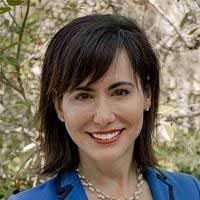
Dr. Stacia Hays is associate dean for graduate education and clinical professor for the Baylor University Louise Herrington School of Nursing. She is also a board-certified Pediatric Nurse Practitioner with an active pediatric practice, and a current Primary Care Editor for the Journal of Pediatric Health Care. She earned her MSN from the University of Texas at Austin, and her DNP from the University of Florida.
Dr. Hays is the recipient of state, national, and international leadership and advocacy awards, including America’s Top 10 NP Award, Florida Advocacy Icon Award, Nurse Practitioner of the Year, Advocacy Scholar Award, and Emerging Nurse Leader. Dr. Hays is a Fellow of the American Association of Nurse Practitioners (AANP) and former Treasurer of the National Association of Pediatric Nurse Practitioners (NAPNAP).
The Modern Era of NP Education
“Progressions in science and healthcare have made all of healthcare more complex,” Dr. Allison says. “And that filters down to nursing and advanced practice nursing. The knowledge base of managing patient care and the technologies that go along with it have grown exponentially. So the skill set required is much bigger and broader now than it was years ago. It’s not just about procedures, but understanding everything about the patient.”
The doctor of nursing practice (DNP) is a response to a more complex practice environment. Emerging from a fragmented landscape of doctoral nursing programs, the University of Kentucky introduced the first formal DNP program in 2001 to prepare nurses for advanced practice, clinical leadership, and healthcare executive roles. AACN then developed a task force to investigate the impact of the DNP and, soon afterward, AACN member schools adopted a position statement recommending moving preparation for advanced nursing practice from the master’s level to the doctorate; a curricular model was formalized in the 2006 DNP Essentials.
Unlike a PhD, which is more research focused, the DNP focuses on evidence translation, quality improvement, systems, leadership, and population health.
“I graduated in 2003 as an NP from UT Austin, and the DNP was just starting to be discussed,” Dr. Hays says. “NP education finally realized that we’ve got to do something to address the demands and the complexity of the healthcare system. The higher education and experience in leadership and health policy have been shown to improve patient outcomes. The focus is really on the DNP now.”
The DNP was developed to train the type of practitioner the modern healthcare system needs: one who goes beyond diagnosis, prescription, and patient management; one who improves systems, evaluates evidence, leads teams, and addresses gaps in care.
“Healthcare leadership positions are often now requiring a doctoral degree because they recognize the benefit,” Dr. Allison says. “DNPs understand quality improvement and health policy at a high level. They know how to influence change as an equal member of the healthcare team. They’re able to keep up with what’s happening in the healthcare system.”
NPs with master’s-level education are still competent and practice-ready. Some nurses want to enter practice quickly and cost-effectively, and an MSN may be the furthest level of education they attain. But the DNP is training a new kind of NP to think at a systems level in improving healthcare outcomes and patient outcomes.
“Even as an NP who just wants to take care of patients, you need to think beyond who’s on your schedule for that day,” Dr. Hays says. “You need to think bigger about the issues that are impacting not only your patient, but what’s happening in your practice setting.”
The growth of the DNP has been substantial. Since 2004, more than 108,000 nurses have graduated with a DNP. From 2024 to 2025, DNP enrollment grew over 5 percent (AACN 2025). But true adoption, while increasing, has lagged behind expectations. AACN initially called for the DNP to be the standard for NP preparation by 2015, but AANP’s 2024 workforce survey found that only one in six NPs hold a DNP. Master’s degrees remain the dominant credential and the largest educational pathway into the NP role.
“We have not done a good enough job marketing what the DNP truly is,” Dr. Hays says. “If your goal is to make lasting change in your community and to have a meaningful impact advancing patient care and driving better health outcomes, obtaining a Doctor of Nursing Practice (DNP) is a direct pathway to making that goal a reality,” Dr. Hays says. “But it’s not just going to school. It’s a doctoral degree. You have to be motivated.”
Challenges in NP Education
In 2022, the National Task Force (NTF) on Quality Nurse Practitioner Education increased the clinical hours for NP education programs from 500 to 750. Those extra hours may increase an NP’s preparation, but can also delay entry into advanced practice roles, requiring more faculty, clinical sites, and preceptors. It’s not clear that the evidence supports those additional clinical hours adding additional competency (National League for Nursing 2022).
In 2025, nearly 17,000 qualified applications were turned away from graduate nursing programs, with barriers including faculty shortages, insufficient clinical placement sites, preceptors, classroom space, and budget constraints (AACN 2026).
“The DNP takes longer than an MSN,” Dr. Allison says. “And since it takes longer, it costs more. I think we’re going to continue to experience tension in terms of what’s cost-effective for students, and what’s cost-effective for schools, even though we are all wholeheartedly on board with the DNP.”
In 2026, the US Department of Education (DOE) declined to add nursing to the definition of professional degrees, despite the Department’s own recognition that nursing meets the operative definition of ‘professional student’ as defined by Congress. Nursing’s exclusion from that list means master’s and doctoral nursing students will be denied the highest student loan limits. AACN strongly opposed the decision (AACN 2026).
“We’ve seen it affect our enrollment,” Dr. Allison says. “We’ve seen students enroll in, say, a BSN to DNP program, and they drop the doctorate because they’re not sure about financial aid. It has significantly impacted nurses’ decisions whether to return to school or not.”
It’s possible that the actual damage will not be as severe as feared. The upper limit of government loans goes to $200,000, which is adequate for most medical schools’ tuition. But DNP programs are significantly cheaper than medical school: 90 percent of advanced practice nursing schools cost less than $100,000 in total. As of August 2026, a court order has allowed MSN and DNP programs to be treated as professional degree programs for loan-limit purposes while litigation continues. But the future is unclear.
In its decision to exclude nursing from the list of professional degrees, the DOE has reverted to the regulatory definition of ‘professional degree’ from the Higher Education Act (HEA) of 1965, the same year that the first NP program was established. Language matters: NPs have worked hard to professionalize their role and expand healthcare access since 1965; advocacy battles continue in several states where NPs are bound to outdated and burdensome supervisory agreements with physicians.
“We’re one of the most trusted professions in the country,” Dr. Allison says. “The healthcare system wouldn’t function without nurses. And so it’s really disenfranchising for the profession to not be recognized, officially, as a profession.”
The Future of NP Education
When it comes to the Merriam-Webster definition, NPs are consummate professionals (notably, nurses are the dictionary’s first given example of a professional).
And the NP profession has continued to mature beyond the DNP: residencies, fellowships, and specializations for NPs are bringing a new class of clinician into the American healthcare system. But perhaps the best way to advocate for nursing as a profession is to continue to graduate excellent nurse practitioners who are confident and prepared to meet the world as inarguable experts.
“As we get better at implementing competency-based education, we’re going to see students able to do more before they even get to a practice setting,” Dr. Hays says. “It’s not about being able to check a box on an exam. It’s demonstrating you’re able to learn something and apply it to practice.”
NP education is continuing to evolve. The integration of AI into healthcare is already being discussed in the classroom: how to use AI to help manage patients, how not to use it, and how to use it in nursing education itself. An increasing awareness of mental health is being considered across all specialties in response to needs identified by nurse practitioners and other health professionals. But one thing will remain the same across all of nursing education: tomorrow’s NPs, like past NPs, will be trained to meet the shifting needs of a dynamic and diverse population, making a difference in patients’ lives, and thus the world.
“My hope is that with all the changes that have been made to NP education, we’re going to see more NPs engaged with community, healthy policy, and organizational leadership,” Dr. Hays says. “That’s going to be a portion of their position. They’ll still be seeing patients, but their other responsibility will be to get out there and find ways to make changes. I think we’re going to see a lot more NPs and organizational leadership, because we’re starting to see the benefits of having people who have been in the trenches now lead.”

Matt Zbrog
WriterMatt Zbrog is a writer and researcher from Southern California, and he believes nurse practitioners (NP) are an indispensable component of America’s current and future healthcare workforce. Since 2018, he’s written extensively about the work and advocacy of NPs, with a particular focus on the rapid growth of specialization programs, residencies, fellowships, and professional organizations. As part of an ongoing series on state practice authority, he’s worked with NP leaders, educators, and advocates from across the country to elevate policy discussions that empower NPs. His articles have featured interviews with the leadership of the American Association of Nurse Practitioners (AANP), the National Association of Pediatric Nurse Practitioners (NAPNAP), and many other professional nursing associations.